Enbiosis “The World’s First Digital Twin & AI Powered Nutraceutical Formulation Engine”
Targeting the Root Cause, Not the Symptom: The Power of the Gut Microbiome


Targeting the Root Cause, Not the Symptom: The Power of the Gut Microbiome


Is the Answer Hidden in Your Gut?

The symptom you have been treating for years may not be where the problem actually begins.

Eye discomfort, skin irritation, digestive irregularity, low energy. Most people address each one separately, see a different specialist, try a different solution. Sometimes it helps. But often the same symptoms keep coming back, showing up in a slightly different form, in a slightly different place. That pattern is not a coincidence. There is usually something connecting them.

Microbiome research keeps arriving at the same conclusion: many of these symptoms share a common root cause, and that root cause runs through the gut microbiome.

Around 2,500 years ago, Hippocrates said something that stayed with us: “Let food be thy medicine, and medicine be thy food.” For centuries, it sounded like a beautiful idea with nowhere to go.

Today, the science behind that idea is catching up fast. Enbiosis is where that science becomes actionable.

In this article, we explore how the gut microbiome connects to different systems in the body, what happens when that balance shifts, and how Enbiosis approaches these connections through gut-organ axes.


Nutraceuticals: The Bridge Between the Gut and Systemic Health

Turmeric’s effect on inflammation has been talked about for years. But how does it actually work?

When you ingest turmeric, its active compound, curcumin, does not immediately enter your bloodstream. It reaches the gut first, where specific bacterial strains must metabolize it into a bioactive form that the body can actually absorb. Without this critical microbial intervention, the compound’s potential remains largely locked.

This is true of nutraceuticals broadly. Curcumin from turmeric, sulforaphane from broccoli, EGCG from green tea. These bioactive compounds found naturally in food all follow the same path. They reach the gut, interact with the bacterial populations living there, and get converted into molecules the body can actually use. The gut microbiome is not just a stop along the way. It is the mechanism.

The healthier and more diverse that bacterial population, the better it does its job. And what sits on the other side of that process is something most people do not expect: a direct connection to systems well beyond digestion.

A nutraceutical gets the process started. The gut microbiome determines where it goes from there. And as it turns out, it goes much further than the digestive system.


The Microbiome Factory: Why the Same Input Produces Different Results

Does this conversion happen the same way in everyone? It does not. There is significant inter-individual variability in the bacterial populations responsible for producing protective metabolites like short-chain fatty acids. Some plant-based compounds only reach a bioavailable state when processed by specific bacterial strains. The same nutraceutical can produce entirely different outcomes in two different guts. Which raises an uncomfortable question: what happens when the gut is not in a position to do its job at all?


Dysbiosis: When the Factory Breaks Down

In a state of dysbiosis, the gut ecosystem loses balance and efficiency. Even well-chosen nutraceuticals may pass through without being converted into a bioavailable state. In some cases, opportunistic bacterial strains hijack these compounds and transform them into pro-inflammatory byproducts. Something intended to support the body ends up adding to its burden instead.

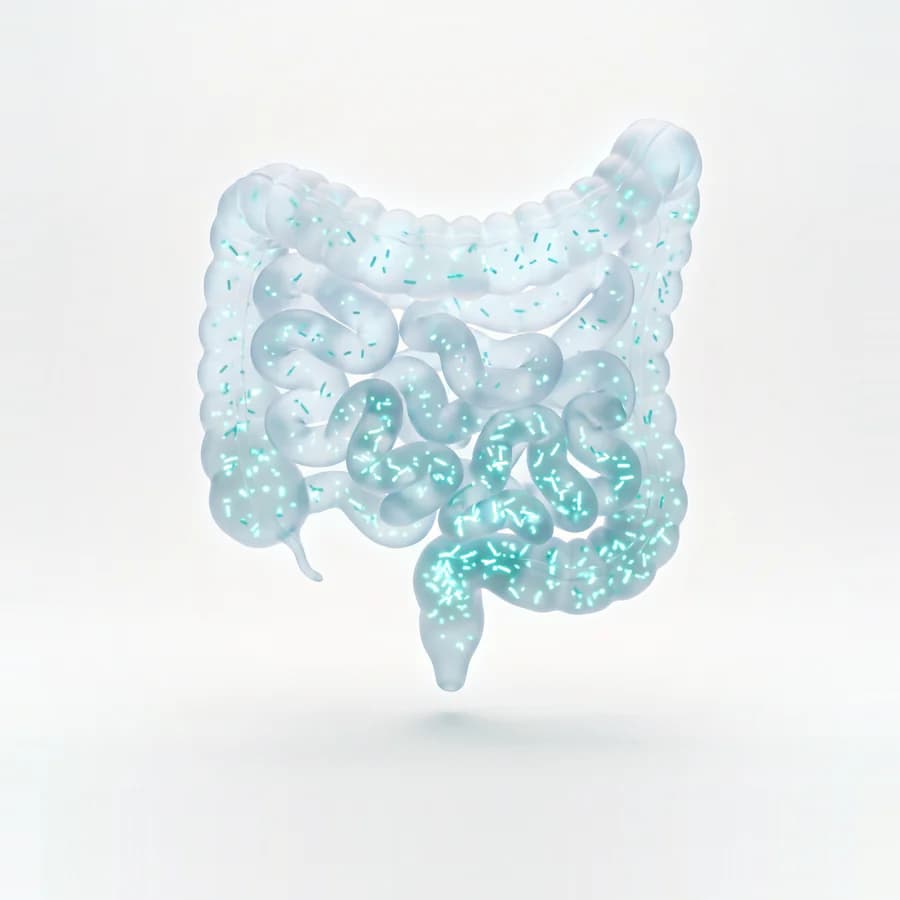
The consequences extend beyond digestion. Changes in the gut environment can influence immune responses, brain chemistry, skin integrity, and metabolic regulation. Symptoms may appear in different parts of the body while originating from the same underlying disruption within the gut microbiome. The symptom shows up in one place. The root cause sits somewhere else entirely: in the gut microbiome.

Most approaches address the symptom where it appears and move on. Enbiosis starts with a different question altogether.


The Gut Is Not Just a Digestive Organ: The Gut-Organ Axes

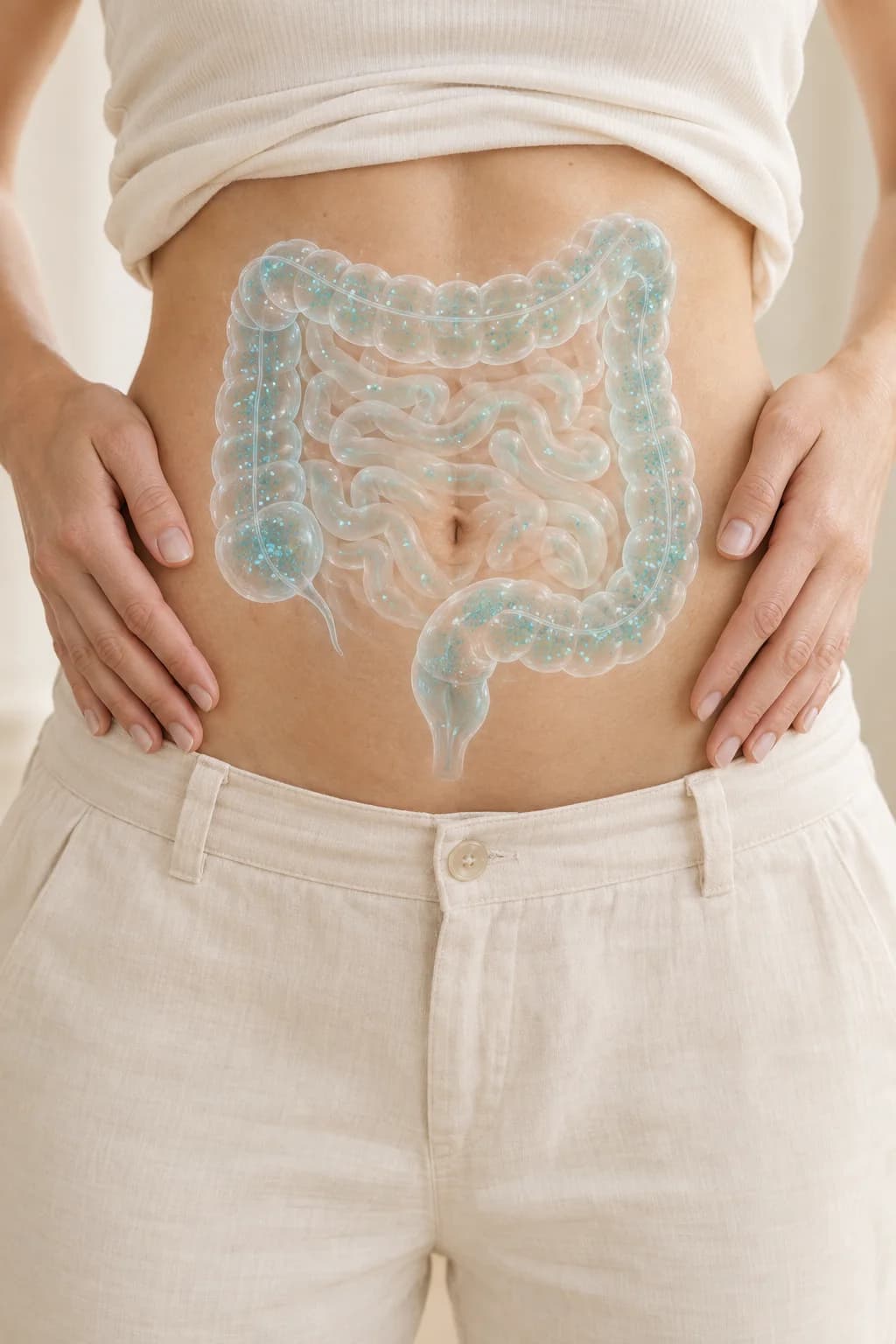
Around 75% of the body’s immune cells are housed in the gut wall. That makes the gut the largest immune organ in the body, and most people have no idea. The molecules it produces do not stay local. They enter the bloodstream and reach places most people would never connect to digestion: the eyes, the brain, the skin, the metabolic system. Science calls these connections axes, and they work in both directions. The gut influences these systems, and these systems send signals back.

What does that actually look like?


Gut-Eye Axis

When gut balance is disrupted, the resulting inflammation can reach the ocular surface. If your eyes feel uncomfortable in the morning or irritated after screen time, and no ophthalmological cause has been identified, the gut microbiome may be worth looking into.


Gut-Brain Axis

The gut produces a significant portion of the body’s serotonin and maintains bidirectional communication with the central nervous system through the vagus nerve. When that balance shifts, brain chemistry follows. People who say “my stomach always acts up when I’m stressed” or “when my digestion improves, my head clears” are describing this axis without realising it.


Gut-Skin Axis

The gut also produces metabolites that hold the skin barrier together. If you have ever noticed your skin flaring up during a stressful period or after a disrupted diet, that connection may not be coincidental. Skin conditions that flare without a clear trigger are often not purely a skin issue. They can be a surface-level reflection of inflammation that started somewhere else entirely.


Gut-Metabolic Axis

Certain gut bacteria produce molecules that play a direct role in maintaining metabolic homeostasis. When this axis is disrupted, insulin sensitivity can decline and blood sugar regulation becomes harder to maintain. Eating well does not always translate to metabolic stability. For many, the missing variable is the gut microbiome.


The pattern across all of these is the same. The symptom appears in one place. The root cause begins somewhere else. And because every gut microbiome is different, the same food can support healthy metabolite production in one person and do very little in another.


Enbiosis: Food as Medicine as Quantifiable Science

Enbiosis begins from a different starting point. Instead of asking which supplement to add, it asks a more fundamental question: what biological functions have stopped working, and which beneficial molecules is the body no longer able to produce as a result?

To answer that, the system analyzes thousands of real human microbiome profiles using a digital twin approach. In simple terms, this means building a functional virtual model of the gut microbiome and running it forward to observe how metabolic pathways respond to different nutritional inputs. Through this process, it maps which pathways are no longer functioning as they should and identifies the metabolites the body is consequently failing to produce. Many of these target molecules are compounds that cannot simply be added to a supplement and absorbed. They need to be produced from within, by the gut microbiome itself.

That is where the AI-powered Retrosynthesis Engine takes over. Working backwards from the target metabolite, it searches across the full landscape of gut microbial metabolism to find the minimal set of food-grade precursors that gut bacteria can convert into that molecule. Every ingredient in the final formulation already exists in the food supply. What makes the difference is how they are combined and what the microbiome’s own biosynthetic machinery will do with them.

Whether the objective sits within the gut-eye axis, the gut-brain axis, or metabolic homeostasis, the engine works the same way. The target changes. The methodology does not.

The result is a biological formulation designed around a clearly defined metabolic outcome for people with a specific health condition, with a mechanistic rationale established even before clinical studies begin.

This is where food as medicine stops being a slogan and starts being something you can actually measure.


Conclusion: The Future of Health Starts in the Gut

If your eyes are bothering you, you see an eye doctor. If your skin flares up, you see a dermatologist. That is the natural response, and it is usually the right place to start. But sometimes the symptom and its root cause are not in the same place.

The gut microbiome is the silent orchestrator that most people never think to look at. Through the gut-organ axes, it maintains a continuous dialogue with systems across the body. When the balance holds, that dialogue supports systemic harmony. Inflammation stays in check. Metabolites get produced. And the body does what it is supposed to do. When it breaks down, the effects ripple outward, showing up in places that seem unrelated until you trace them back to their biological origin.

Enbiosis asks the question from that origin point. Not where the symptom appears, but where it begins. Which metabolite is missing? Which bacterial strains should be producing it? What inputs will get them there? Those are the questions the platform is built to answer.

Hippocrates may have said it first. But it has never been this actionable.


Frequently Asked Questions


What does “Food as Medicine” actually mean?

Food as Medicine is not about replacing medical treatments with groceries. It is the scientific understanding of how specific dietary compounds, when processed by your unique gut microbiome, convert into the bioactive molecules your body requires for optimal function. Through the gut microbiome, certain food-based inputs can regulate inflammation, support immune function, and maintain metabolic homeostasis in a way that is both measurable and targeted.


What is a nutraceutical?

A nutraceutical is a bioactive compound found naturally in food that provides physiological benefits beyond basic nutrition. Unlike vitamins, which primarily fill nutritional deficiencies, nutraceuticals like curcumin from turmeric, sulforaphane from broccoli, or oleocanthal from olive oil act as biological triggers. Once metabolized by gut bacteria, they initiate specific cellular responses. The gut microbiome is the activator that makes these compounds work.


What is dysbiosis?

Dysbiosis is a state of microbial imbalance in the gut. When this occurs, beneficial bacterial populations decline and the conversion of nutrients into protective metabolites breaks down. In a dysbiotic state, even high-quality nutraceuticals may fail to reach a bioavailable state. In some cases, opportunistic bacterial strains can hijack these healthy compounds, converting them into pro-inflammatory byproducts that add to the body’s systemic burden.


What is the Retrosynthesis Engine and how does it work?

The Retrosynthesis Engine is Enbiosis’s proprietary AI algorithm that approaches nutritional formulation through reverse engineering. Most nutritional approaches start with a list of healthy ingredients and work forward from there. The Retrosynthesis Engine starts at the biological objective instead. It first identifies which metabolites are deficient based on your microbiome profile. Then it works backward to calculate the minimal, precise set of food-grade inputs required to trigger the production of those metabolites within your specific microbial environment. The biological destination is defined first. The nutritional route is calculated to get you there.


References


Dai, S., et al. (2025). Alleviative effect of probiotics and prebiotics on dry eye in type 2 diabetic mice through the gut-eye axis. The Ocular Surface, 36, 244-260.


Gao, Y., et al. (2024). Double-side role of short chain fatty acids on host health via the gut-organ axes. Animal Nutrition, 18, 322-339.


Karakan, T., et al. (2022). Artificial intelligence-based personalized diet: A pilot clinical study for irritable bowel syndrome. Gut Microbes, 14(1), 2138672.


Muntaha, S.T., et al. (2025). Polyphenol-protein particles: A nutraceutical breakthrough in nutrition and food science. Journal of Agriculture and Food Research, 19, 101641.


Sharma, V., & Sharma, R. (2024). Food is medicine initiative for mitigating food insecurity in the United States. Journal of Preventive Medicine and Public Health, 57(2), 96.


Tunali, V., et al. (2024). A multicenter randomized controlled trial of microbiome-based artificial intelligence-assisted personalized diet vs low-fermentable oligosaccharides, disaccharides, monosaccharides, and polyols diet. Official journal of the American College of Gastroenterology, 119(9), 1901-1912.

Related Articles
Microbiome Science
June 22, 2026
What Are Short-Chain Fatty Acids and Why Does Your Body Need Them?

  We know that fibre-rich foods are good for us. But this is down to a more complex process than most people realise. When gut bacteria break down fibre, they...

Microbiome Science
June 22, 2026
What Is Dysbiosis? Causes, Symptoms and What You Can Do

Trillions of microorganisms live in our gut. These bacteria, fungi, viruses and other microbes coexist in an ecosystem that plays a central role in digestion, immune function and overall health....

Microbiome Science
June 22, 2026
What Is the Gut Microbiome and Why Does It Matter?

What Is the Gut Microbiome and Why Does It Matter? The gut microbiome is one of the most widely researched topics in modern health science. But what exactly is it,...

Cookies are placed on our site. For detailed information about cookies, you can review the Terms of Use and Privacy Policy.