

What Is a Nutraceutical? Beyond the Label
The term ‘nutraceutical’ has been in use since the 1980s. But its meaning is evolving.
A Term Worth Understanding
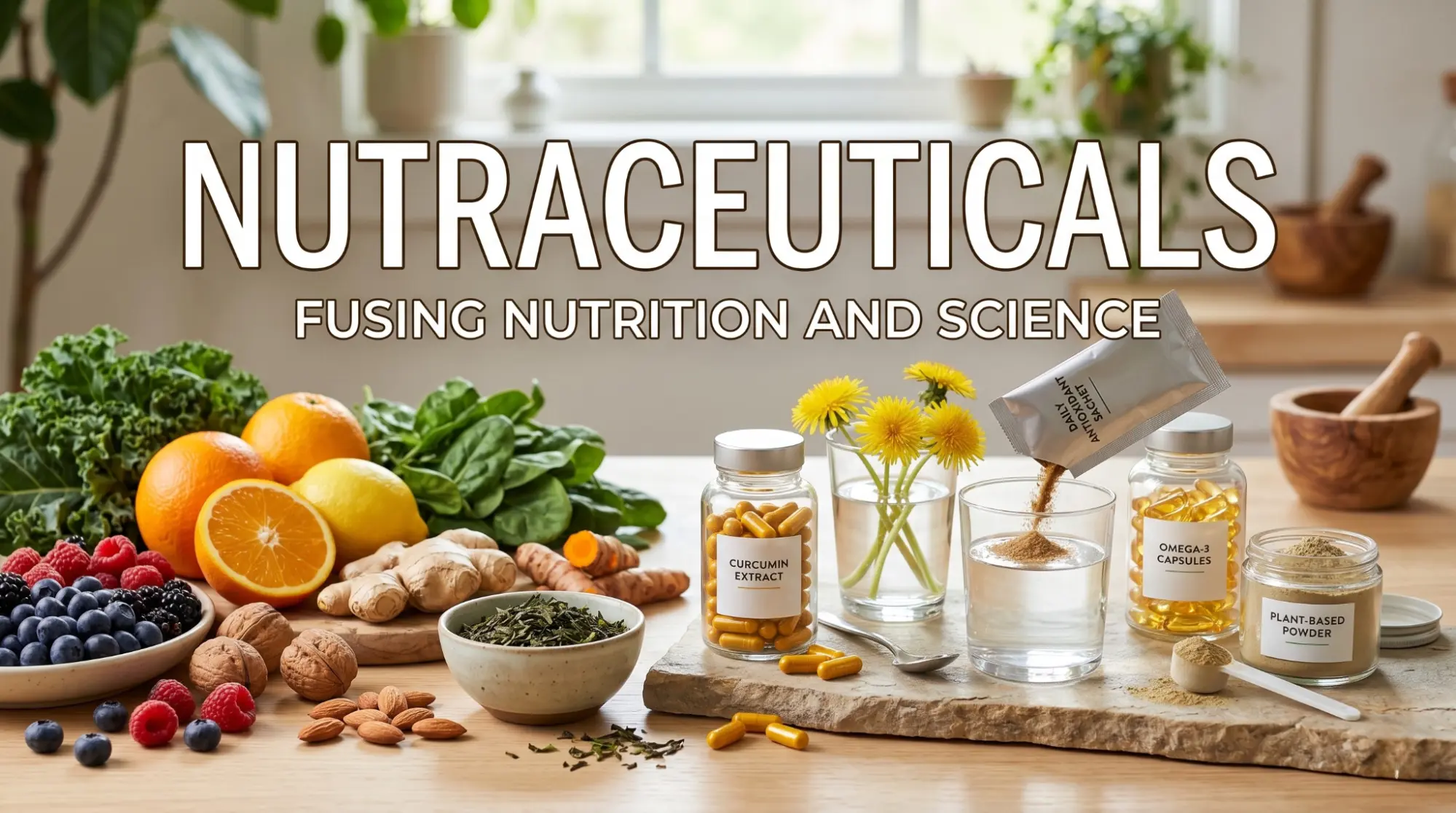
‘Nutraceutical’ is a combination of two words: ‘nutrition’ and ‘pharmaceutical’. It refers to food-derived products that provide health benefits beyond basic nutrition.
The term is often used interchangeably with ‘functional food’ and ‘dietary supplement’, but there are meaningful differences. Functional foods are foods that are normally consumed as part of a diet and have recognised health benefits. Dietary supplements are products that are added to the diet to support health, but they are not necessarily derived from food. By contrast, nutraceuticals are derived from food sources and are usually taken in a form similar to a medicine, such as a capsule, powder or sachet.
In practice, these categories overlap. For example, a prebiotic fibre can be a functional food ingredient, a dietary supplement and a nutraceutical all at once. What matters more is what the product is designed to do and whether there is credible science behind it.
The Difference Between Food, Supplements and Nutraceuticals
Food nourishes. Supplements fill nutritional gaps. Nutraceuticals go further still, as they are designed to deliver a measurable biological effect.
This idea is not new. Hippocrates introduced the concept of ‘food as medicine’ over two thousand years ago. What is new is the science available to realise this concept. Recent advances in microbiome research, computational biology and AI mean it is now possible to design food-derived formulations that target specific biological processes with a level of precision that was not previously possible.
The term ‘nutraceutical’ has been in use since the 1980s. But its meaning is evolving.
A Term Worth Understanding
‘Nutraceutical’ is a combination of two words: ‘nutrition’ and ‘pharmaceutical’. It refers to food-derived products that provide health benefits beyond basic nutrition.
The term is often used interchangeably with ‘functional food’ and ‘dietary supplement’, but there are meaningful differences. Functional foods are foods that are normally consumed as part of a diet and have recognised health benefits. Dietary supplements are products that are added to the diet to support health, but they are not necessarily derived from food. By contrast, nutraceuticals are derived from food sources and are usually taken in a form similar to a medicine, such as a capsule, powder or sachet.
In practice, these categories overlap. For example, a prebiotic fibre can be a functional food ingredient, a dietary supplement and a nutraceutical all at once. What matters more is what the product is designed to do and whether there is credible science behind it.
The Difference Between Food, Supplements and Nutraceuticals
Food nourishes. Supplements fill nutritional gaps. Nutraceuticals go further still, as they are designed to deliver a measurable biological effect.
This idea is not new. Hippocrates introduced the concept of ‘food as medicine’ over two thousand years ago. What is new is the science available to realise this concept. Recent advances in microbiome research, computational biology and AI mean it is now possible to design food-derived formulations that target specific biological processes with a level of precision that was not previously possible.

The Problem With the Category
Most nutraceuticals on the market are developed using a process that has not changed much in decades. A promising ingredient with a good safety profile and some supporting research is selected and tested on a small group. If the results are favourable, the product is brought to market.
However, the mechanism behind most formulations is not always clearly established, and clinical evidence can be limited. Since everyone’s gut microbiome processes ingredients differently, a formulation designed around an average may not produce consistent results for everyone.
This explains why the same supplement can be effective for one person and ineffective for another. It is not a coincidence. It is a design problem.
Where the Science Is Heading
The next generation of nutraceuticals is being developed differently. Rather than starting with an ingredient, the best approaches begin with a biological target. Researchers ask which pathways need support, which compounds the body is not producing enough of, and which food-grade ingredients can address those needs.
The gut microbiome is playing an increasingly important role in this work. It processes every ingredient consumed by a person and produces compounds that influence health far beyond digestion. Understanding how the gut microbiome works and designing for it with precision is what will set them apart.
At Enbiosis, this is where we start. With the biology, not the ingredient list.
References
Puri, V., et al. (2022). A comprehensive review on nutraceuticals: therapy support and formulation challenges. Nutrients, 14(21), 4637.
Chopra, A. S., et al. (2022). The current use and evolving landscape of nutraceuticals. Pharmacological Research, 175, 106001.
Santini, C., Supino, S., & Bailetti, L. (2023). The nutraceutical industry: trends and dynamics. In Case Studies on the Business of Nutraceuticals, Functional and Super Foods (pp. 3-20). Woodhead Publishing.
Muntaha, S. T., et al. (2025). Polyphenol-protein particles: A nutraceutical breakthrough in nutrition and food science. Journal of Agriculture and Food Research, 19, 101641.
Pramanik, A., et al. (2026). Global future trends related to nutraceuticals. In Nutraceuticals (pp. 305-329). CRC Press
Most nutraceuticals on the market are developed using a process that has not changed much in decades. A promising ingredient with a good safety profile and some supporting research is selected and tested on a small group. If the results are favourable, the product is brought to market.
However, the mechanism behind most formulations is not always clearly established, and clinical evidence can be limited. Since everyone’s gut microbiome processes ingredients differently, a formulation designed around an average may not produce consistent results for everyone.
This explains why the same supplement can be effective for one person and ineffective for another. It is not a coincidence. It is a design problem.
Where the Science Is Heading
The next generation of nutraceuticals is being developed differently. Rather than starting with an ingredient, the best approaches begin with a biological target. Researchers ask which pathways need support, which compounds the body is not producing enough of, and which food-grade ingredients can address those needs.
The gut microbiome is playing an increasingly important role in this work. It processes every ingredient consumed by a person and produces compounds that influence health far beyond digestion. Understanding how the gut microbiome works and designing for it with precision is what will set them apart.
At Enbiosis, this is where we start. With the biology, not the ingredient list.
References
Puri, V., et al. (2022). A comprehensive review on nutraceuticals: therapy support and formulation challenges. Nutrients, 14(21), 4637.
Chopra, A. S., et al. (2022). The current use and evolving landscape of nutraceuticals. Pharmacological Research, 175, 106001.
Santini, C., Supino, S., & Bailetti, L. (2023). The nutraceutical industry: trends and dynamics. In Case Studies on the Business of Nutraceuticals, Functional and Super Foods (pp. 3-20). Woodhead Publishing.
Muntaha, S. T., et al. (2025). Polyphenol-protein particles: A nutraceutical breakthrough in nutrition and food science. Journal of Agriculture and Food Research, 19, 101641.
Pramanik, A., et al. (2026). Global future trends related to nutraceuticals. In Nutraceuticals (pp. 305-329). CRC Press