From Target to Formulation: How Enbiosis Identifies What the Body Needs and Designs for It
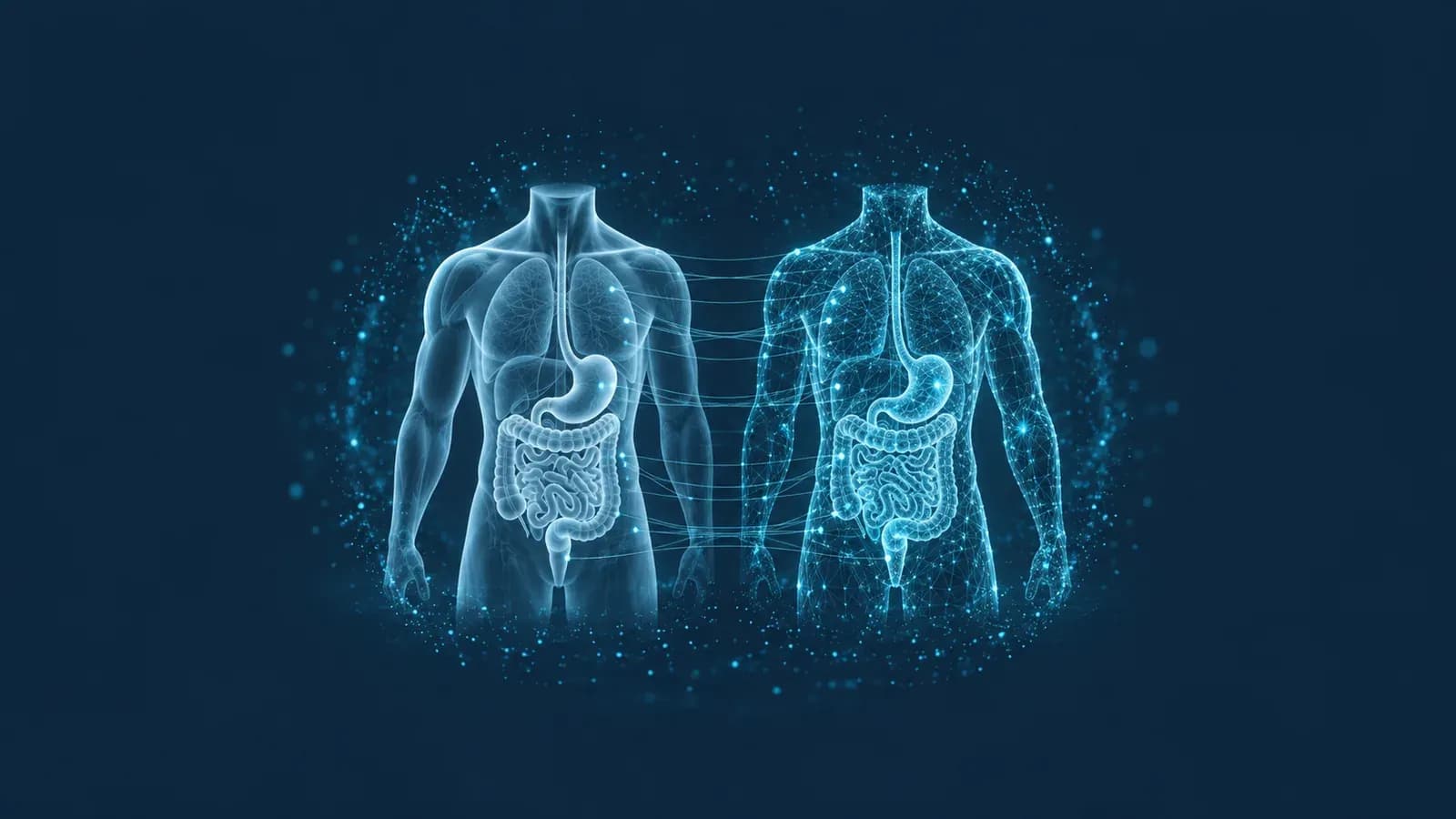
In a previous piece, we defined a digital twin and explained how Enbiosis uses this technology to model the gut microbiome. However, creating a virtual model is only the first step. The more important question is: what can you do with it?
This is where two core components of the Enbiosis platform come in: metabolic pathway identification and the retrosynthesis engine. Together, these components take the output of the digital twin simulation and translate it into a formulation with a defined biological rationale.
What Is a Metabolic Pathway?
To understand how Enbiosis identifies metabolic pathways, it helps to know what they are.
A metabolic pathway is a series of chemical reactions that occur inside cells. Each reaction is carried out by a specific enzyme, with each step building on the last. The end result is the production of a compound that the body needs, such as energy, a structural component or a signalling molecule.
The gut microbiome is home to a vast number of these pathways. Gut bacteria produce compounds that the human body cannot produce itself, including short-chain fatty acids, neurotransmitter precursors, and immune-regulating molecules. These compounds travel beyond the gut and influence health across multiple organ systems.
However, when the gut microbiome is disrupted, some of these pathways do not function as they should. Certain compounds are produced in insufficient amounts. Others are overproduced. In this situation, the body may not receive the compounds it needs to function properly.
How Does Enbiosis Identify Disrupted Pathways?
This is where the digital twin comes in.
For a given health condition, the Enbiosis platform runs simulations across thousands of real human microbiome profiles. The platform models how microbial communities in these profiles respond to different conditions and identifies patterns, determining which metabolic pathways are not functioning properly and which compounds are not being produced in sufficient amounts.
This is not guesswork. The platform uses genome-scale metabolic models of gut bacteria, mapping the full range of biochemical reactions that different microbial species can carry out. By running these models across a diverse set of microbiome profiles, the platform can identify the specific biological targets relevant to a given health condition.
The output is not a list of ingredients. Rather, it is a set of defined biological targets: the compounds the body needs more of and the pathways that require support to produce them.
The Retrosynthesis Engine
Once the biological targets have been identified, the next step is to find the right ingredients to address them. This is where the Retrosynthesis Engine comes in.
The concept of retrosynthesis originally comes from chemistry. Chemists use it to work backwards from a target molecule, identifying the necessary reactions and starting materials. Enbiosis applies the same logic to the gut microbiome.
Rather than starting with a list of ingredients and testing their potential effectiveness, the Retrosynthesis Engine starts with the target compound and works backwards. It searches all gut microbial metabolic pathways to identify the minimum number of food-grade precursors that gut bacteria can convert into the required compound.
The result is a formulation in which every ingredient plays a specific biological role. Nothing is selected by assumption.
From Target to Formulation
Metabolic pathway identification and the retrosynthesis engine work together to form a continuous process. The digital twin identifies what the body needs. The retrosynthesis engine then finds the most precise way to deliver these nutrients.
The result is a formulation built backwards from a biological outcome rather than forwards from an ingredient list. By the time any clinical testing begins, the role of every ingredient is defined and there is a scientific rationale behind every target.
This approach was first applied in a prospective pilot study targeting the gut-eye axis in dry eye condition. The platform identified the metabolic pathways involved in ocular surface health and determined which compounds were not being produced in sufficient amounts. It then designed a food-grade formulation to address them. The study demonstrated meaningful improvements in both tear production and symptom scores.
The dry eye application was the first proof of concept. The same process is now being applied to a growing pipeline of health conditions.
Why This Approach Matters?
Most nutraceutical formulations are still developed in the same way. A promising ingredient is selected, tested on a small group and brought to market if the results are favourable. The mechanism is often assumed rather than established.
Metabolic pathway identification and the retrosynthesis engine change this approach. Rather than asking which ingredient might help, the platform identifies what the body actually needs and works backwards from there. The formulation is the answer to a biological question, rather than a collection of promising ingredients.
This does not make clinical validation any less important. It makes it more focused. By the time a formulation reaches clinical trials, the biological rationale is already in place.
As microbiome science continues to develop, this kind of precision will become increasingly important. The gut microbiome is complex, unique to the individual, and deeply connected to health across multiple systems. Designing for it requires more than just good ingredients. First, you need to understand the biology.
That is where Enbiosis starts.
References
Mardinoglu, A., & Palsson, B. Ø. (2025). Genome-scale models in human metabologenomics. Nature Reviews Genetics, 26(2), 123–140.
Nalbantoglu, O. U., Ermis, B. H., & Gundogdu, A. (2025). Deep learning-enhanced wellness scores: A population level study on gut microbiome profiling and health prediction. Biomedical Signal Processing and Control, 110, 108146.
Kim, C. H. (2023). Complex regulatory effects of gut microbial short-chain fatty acids on immune tolerance and autoimmunity. Cellular & Molecular Immunology, 20(4), 341–350.
Tîrziu, A.-T., et al. (2024). From gut to eye: exploring the role of microbiome imbalance in ocular diseases. Journal of Clinical Medicine, 13(18), 5611.